DVLA Private Reg Plate Auctions

Recently the DVLA held private registration auctions for three consecutive days, taking bids on number plates with reserves between £250-£2,500. These auctions are held each year and have always attracted attention from the public, but never more-so than recently. With each auction the popularity is increasing, this is largely thanks to social media allowing the DVLA to reach more potential bidders with ease. With a collection of 1,250 varying plates at the latest auction, the bidding got underway.

Be sure to keep up to date with the latest offers and deals at NewReg by following us at Facebook or keep a close eye on our cheap number-plates search page where we gather our latest and greatest bargains and assemble them in a list to make it that much easier for you to get yourself a personalised reg, cheap number plates.

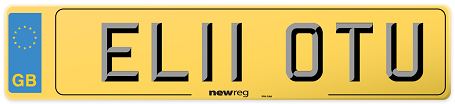
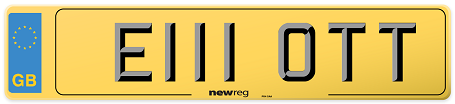
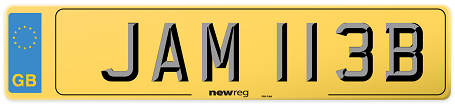
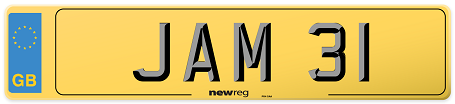
This year there have been some great personalised number plates sold at the auctions, here are a few that were on offer with similar plates still available for purchase at NewReg.

ELLIOT
DVLA Auction Plate:
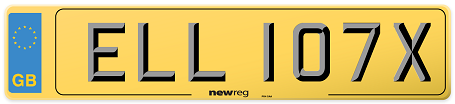
license plate preview showing the name Elliott

NewReg Plates:
license plate preview showing the name Elliott

license plate preview showing the name Elliott

See more Elliot plates here.

JAMIE
DVLA Auction Plate:
license plate preview showing the name Jamie

NewReg Plates:
license plate preview showing the name Jamie

license plate preview showing the name Jamie

See more Jamie plates here.

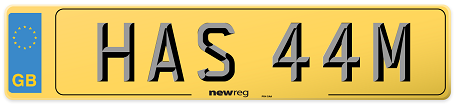
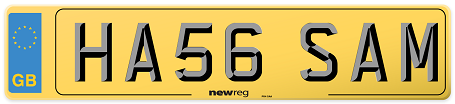
HASSAM
DVLA Auction Plate:
license plate preview showing the name Hassam

NewReg Plates:
license plate preview showing the name Hassam

See more Hassam plates here.

For more information on DVLA auctions you can get everything you’re looking for at dvlaauction.co.uk.

If you’re looking for more ideas/suggestions or you’re looking to create your own personal number plate try using our number plates search.

Banned DVLA Number Plates including the ’67’ Reg!

You may be waiting on the new ’67’ registration number plates to get that perfect personalisation, but the DLVA have other plans. Large quantities of the new plates have been placed onto the DVLA’s ‘Banned Reg’ list – you can view the whole 46-page document here.

This culling of license plates is an old practice of the DVLA; in fact number plates are reviewed twice a year to ensure they are not offensive or related to sensitive subjects – religion, racial or political to list a few. Some combinations are banned all together, such as plates ending in BNP, GOD and ARS.

This time around the DVLA have banned over 300 registration combinations. So far no number plate once placed on the DVLA’s list, has ever been removed from it. Though in previous years many potentially offensive plates have been missed, for example S1 EXY and MR13 UTT. With that said, the DVLA withhold the right to recall any potentially offensive plate at any time.

While many may class these plates as obscene sequences, others seem to favour them and are willing to go the extra length when it comes to costs in order to get exactly what they’re looking for. According to The Sun the private number plate ‘PEN 15’ will cost you £110,000, but you can get ‘PEN 155S’ for just £7,195 from NewReg.co.uk!

How does your Vehicle Number Plate Work?

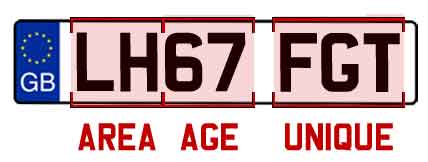
In the past vehicle registration numbers were harder to decipher, that all changed in 2001 when UK number plates were updated and took a more simple approach. Now your registration follows this pattern: two letters, followed by two numbers, finished with three more letters. Each part of this format has its own reasoning.

vehicle registration format explained

Area Code
The first section (two letters), holds both the area in which the vehicle was originally registered and a DVLA local office, so if a number plate begins with ‘L’ then it was registered in London (this is known as the ‘DVLA memory tag’, you can read more on this here: www.newreg.co.uk/dvla-number-plate-identifiers/

Age Identifier
The second section reflects the year in which the vehicle was registered, splitting the year into two halves. If a car is registered in the first half of the ‘car registration year’ (between March and August) then the two numbers simply show the last two digits of the current year. Although, if the vehicle is bought in the second half (between September and February), then the first digit on the plate reflects the last digit of the current year, while the following digit denotes the decade (6 is shown for the current decade 2010 to 2019). Follow this link to learn more about vehicle registration ages: www.newreg.co.uk/services/new_registration_format_age_identifiers/

Random Letters
Lastly, the three letters that finish off each number plate are also used by the DVLA. These numbers are completely random but allow for a unique reg on vehicles that have the same area code and age identifier.  Reading number plates can sometimes be fun and interesting.